AI coding assistants have changed what a small team can do. Tasks that once needed a specialist can now be started by a capable generalist with the right tool. But anyone who has pointed an AI assistant at a messy codebase knows the result can be disappointing. The tool misunderstands the structure, suggests changes that break other parts of the system and invents functions that do not exist.
The problem is usually not the tool. It is the code. Software that is hard for people to understand is also hard for AI to understand. An AI-ready codebase is one designed so that both your engineers and their AI tools can work on it safely and quickly.
This article explains what makes code hard for AI tools, what an AI-ready handover should include, how this approach reduces vendor lock-in and why engineer review still matters.
What makes code hard for AI tools to work with
AI assistants read code in limited chunks and rely on patterns, names and context to understand what is happening. Several common problems get in the way.
- Inconsistent structure. When similar things are organised in different ways across the codebase, the assistant cannot learn a reliable pattern.
- Unclear names. Functions and variables with vague or misleading names push the assistant towards wrong guesses.
- Very large files. Huge files that mix many responsibilities are hard to reason about, for people and machines alike.
- Hidden behaviour. Logic that depends on configuration buried elsewhere, or on side effects that are not obvious, leads to changes that look correct but fail in practice.
- No tests. Without tests, there is no quick way to check whether a suggested change broke something.
- Missing context. The reasons behind important decisions live in people's heads, not in the repository.
None of these problems are new. They have always made software expensive to maintain. AI tools simply make the cost more visible, because they magnify both good and bad structure.
Picture a SaaS team inheriting an application whose account settings are scattered across unrelated folders. An AI coding assistant suggests simplifying a permission check, but an undocumented background task relies on the original behaviour. The change looks reasonable in isolation and disrupts access when that task runs. Without tests covering the dependency, the engineer has little evidence that the suggestion is safe. A typical response is to trace the account flow, document the hidden relationship and add a regression test before attempting the change again. The obstacle is missing context, not a lack of generated code.
What an AI-ready handover includes
When a vendor finishes building software for you, the handover decides how easily you can maintain it afterwards. An AI-ready handover goes beyond giving you the source code. It should include the following.
A clear, consistent structure
The codebase follows predictable conventions. Similar components live in similar places and are built in similar ways. Files are kept to a reasonable size, with each one doing one clear job. This consistency lets AI assistants learn the pattern once and apply it correctly.
Documentation that explains why
Good documentation covers how to run, test and deploy the system. It also records the reasons behind key decisions, so future maintainers do not undo them by accident. A short architecture overview, written in plain language, is often more useful than pages of detail.
Automated tests
Tests give both people and AI tools a safety net. When an assistant suggests a change, the tests show quickly whether anything broke. A codebase with meaningful test coverage can be changed with far more confidence.
Guidance files for AI coding assistants
Many AI coding tools read special guidance files placed in the repository. These files describe the project's conventions, important rules, folder layout and things the assistant should never do. Well written guidance files act like an onboarding document for the AI, steering it towards correct changes.
Ownership of everything
Source code, cloud accounts, domains, third party services and deployment pipelines should all be owned by your organisation, not the vendor.
When we deliver custom software development projects, this kind of handover is part of the standard scope rather than an optional extra.
How an AI-ready codebase ends vendor lock-in
Vendor lock-in often has little to do with contracts. It happens because the only people who understand the software work for the company that built it. Every change, however small, goes back to them, at their price and on their timeline.
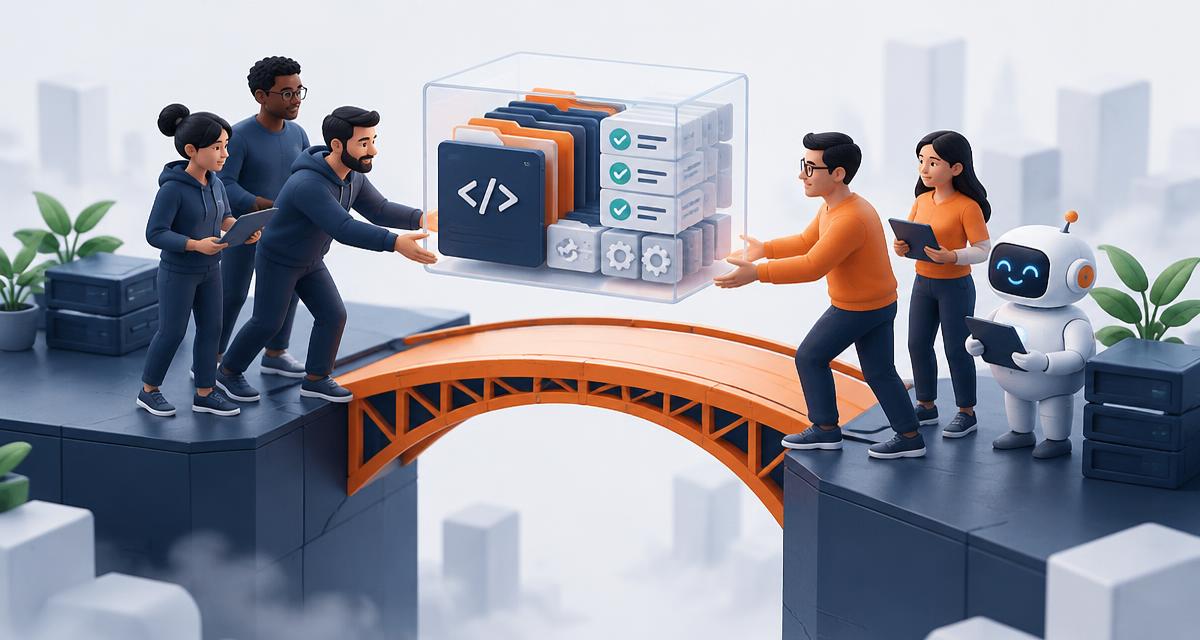
An AI-ready codebase changes that balance. With clear structure, documentation, tests and guidance files, a reasonably skilled internal engineer using an AI assistant can make many routine changes without the original vendor. Larger changes can be given to any competent team, because the knowledge is in the repository rather than in a few people's heads.
This does not mean you will never need outside help. It means you choose when to use it.
Consider a fintech team receiving a repository with clear module boundaries, setup instructions, meaningful tests and a guidance file explaining sensitive payment workflows. A new developer needs to adjust how a validation message appears without changing transaction rules. An AI coding assistant helps locate the relevant module and proposes a focused edit. The developer checks the guidance, runs the relevant tests and asks an experienced engineer to review the change before release. In this typical situation, the team can maintain a routine feature without returning to the original supplier because the handover preserves the reasoning as well as the code.
How engineer review keeps quality high
It is tempting to think AI tools remove the need for experienced engineers. In practice, the opposite is true. AI can produce a large amount of code quickly, and some of that code will be wrong in ways that are hard to spot. Without review, problems accumulate faster than before.
A sensible approach combines the speed of AI with human judgement.
- Every change is reviewed. An experienced engineer reads and approves AI assisted code before it is merged.
- Tests run automatically. No change reaches production without passing the test suite.
- Security is checked. Reviewers look specifically for security weaknesses, which AI tools can introduce without warning.
- Architecture is protected. Reviewers make sure changes follow the agreed structure, so the codebase stays AI-ready over time.
Used this way, AI assisted engineering can shorten delivery times while keeping quality high.
Questions to ask your software vendor
If you are commissioning new software or reviewing an existing supplier, these questions will tell you a lot.
- Will we own the source code, cloud accounts and deployment pipelines from day one?
- What documentation will be delivered, and does it explain the reasons behind key decisions?
- What level of automated testing is included?
- Will the repository include guidance files for AI coding assistants?
- How do your engineers review AI assisted code?
- Could another team take over this codebase without your help?
Clear, confident answers are a good sign. Hesitation on the last question is worth noting.
A common pattern is a telecom business receiving source code while the supplier keeps deployment knowledge outside the repository. During handover planning, the incoming team asks how to rebuild the service in an environment controlled by the business. The answer depends on an undocumented configuration file and a release process that only the outgoing supplier understands. Possessing the code does not remove that dependency. A practical acceptance check is to have the receiving team follow written instructions, confirm authorised access to required accounts and demonstrate a controlled deployment before treating the handover as complete. Missing steps become explicit handover tasks rather than surprises after support changes.
The same operational questions matter when a different team takes responsibility for a live application. The guide to taking over application support from another vendor explains how to plan knowledge transfer, access and support ownership without losing sight of service continuity.
The business case
An AI-ready codebase is not about following a trend. It lowers the cost of every future change, reduces your dependence on any single supplier and lets your team benefit from AI tools safely. Over the life of a system, maintenance usually costs more than the original build, so these savings add up.
If you want software your team can maintain long after the project ends, read more about our software development approach.
How TechBridge helps
TechBridge builds custom software and rescues existing projects using AI assisted engineering, with experienced engineers reviewing every change. Every project ends with an AI-ready handover: consistent structure, plain English documentation, automated tests and guidance files for AI coding assistants. You own your code, accounts and pipelines from the start, so you can maintain the software yourself, with AI tools, or with any partner you choose. Senior leadership stays accountable for quality throughout.
Ready to put this into practice?
Talk to TechBridge about turning these priorities into an accountable plan.
Explore Custom Software DevelopmentAbout the author
Shahrukh Mushtaq
Shahrukh Mushtaq has 15+ years of experience leading delivery and operations for enterprise telecom and fintech platforms, supporting 50+ enterprise customers across multiple markets.
Connect on LinkedIn